Solar thermal hot water installation across the Costa del Sol from Nerja to Gibraltar. Promasol and Vaillant systems sized to your roof, your household and your usage. Three-year parts and labour warranty.
Promasol and VaillantThermosiphon and forcedCTE HE-4 compliantThree-year warranty
Solar hot water can work well on the Costa del Sol because the coast has strong year-round sun and high hot-water demand. A correctly sized solar thermal setup can cover a large share of household hot-water use from the roof, with electric or gas backup for cloudy spells. EnviroCare installs Promasol and Vaillant systems, with locally available parts and a three-year warranty on top of the manufacturer cover.
How solar hot water actually works
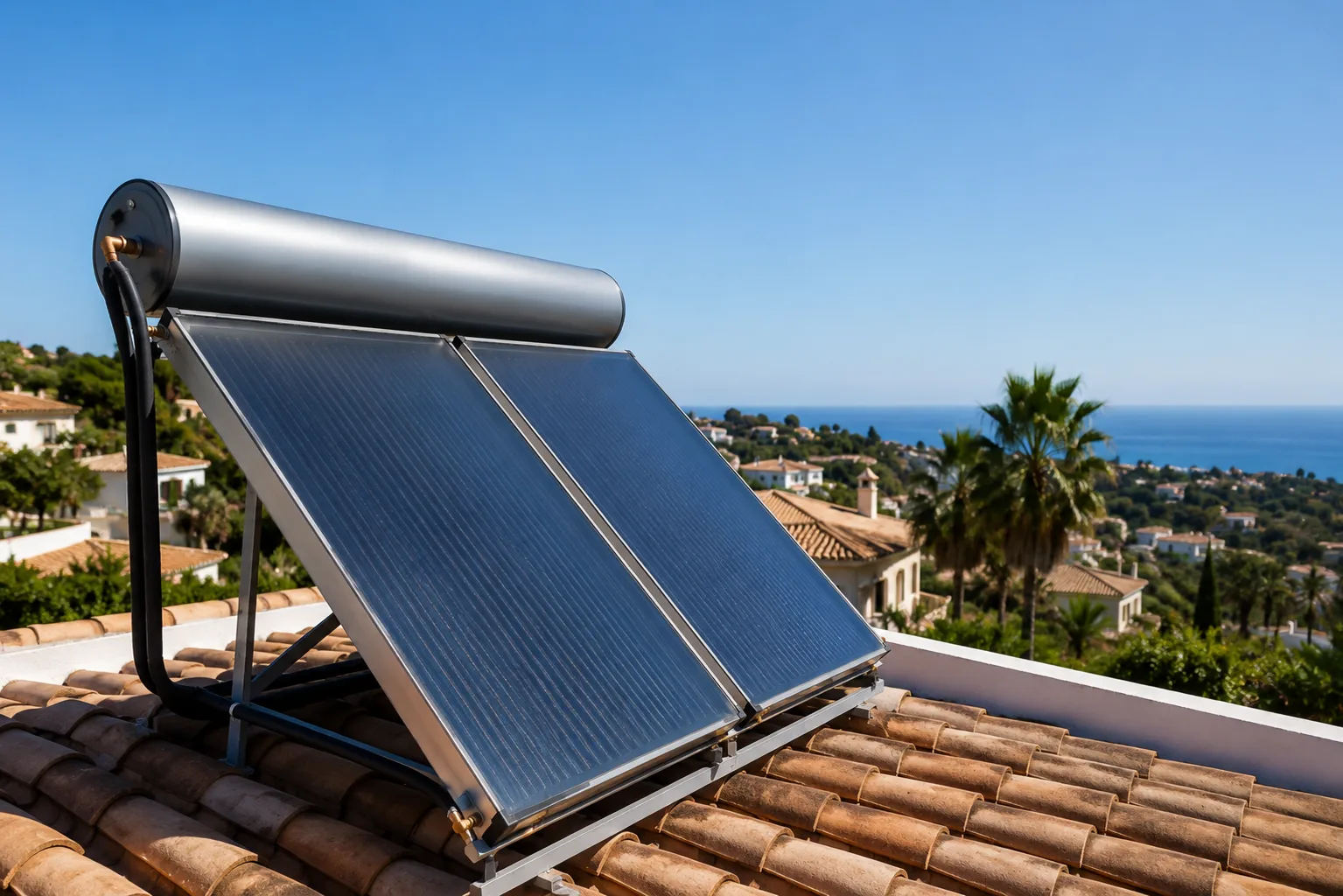
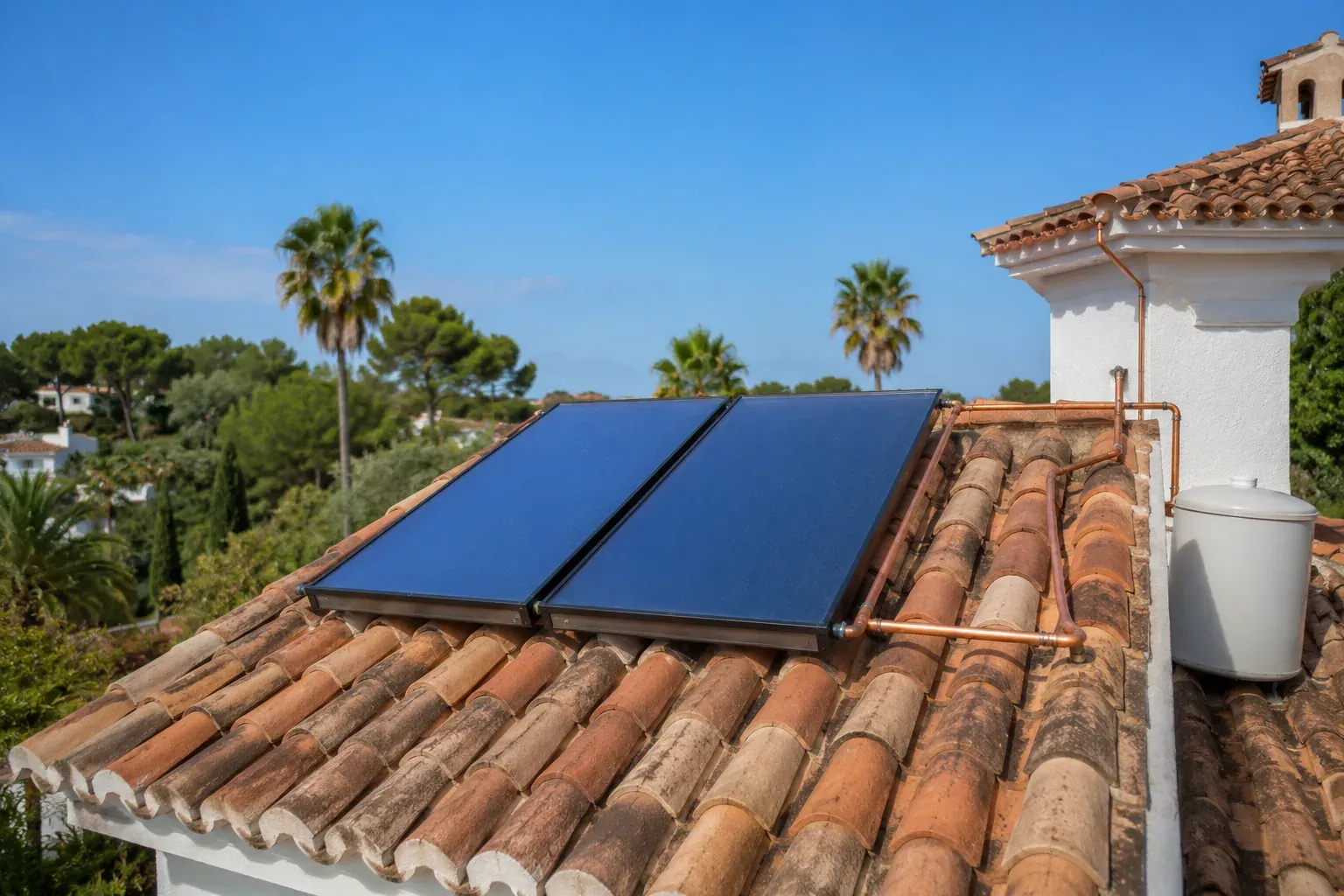
Most residential installs use either a thermosiphon or forced-circulation system. A thermosiphon system mounts the storage tank horizontally above the rooftop collectors and uses natural convection, so there is no pump or controller. A forced-circulation system separates the collectors on the roof from a larger tank inside the property, using a small pump and controller to move heat only when the panels are hotter than the tank. Both setups can include electric or gas backup for cloudy spells.
Thermosiphon: tank on the roof, no pump, lowest cost, simplest service
Forced circulation: tank indoors, pump and controller, larger capacity
Backup element: electric immersion or gas boiler kicks in on cloudy days
Anti-freeze loop: glycol filled circuit on forced systems for cold snaps
What solar can realistically deliver on the Costa del Sol
A correctly sized system covers roughly 60 to 80 per cent of a household's annual hot water demand on this coast, with the higher end achievable on south-facing roofs with no shading. May to October is effectively free hot water from the roof. November to February the backup element does more of the work as panel output drops and demand stays the same. The system never replaces the backup boiler or immersion completely, and any installer telling you otherwise has not lived through a wet January on the coast. The honest pitch is heavy reduction in running cost, not zero running cost.
Spanish regulations: CTE HE-4 and renovations
Spain has required new builds and major renovations to provide a percentage of domestic hot water from renewable sources since the Codigo Tecnico de la Edificacion was updated. The relevant section is HE-4, which sets the minimum solar contribution by climate zone and household size. The Costa del Sol sits in the highest solar zone, so the required contribution is at the top of the scale. For most homeowners this matters in two cases: a major renovation that triggers the regulation, and a property sale where the buyer's solicitor checks the certificate. We supply the install paperwork and CE certificates needed for compliance and resale.
Sizing the system to the property
Two figures drive the design. Litres of hot water needed per day, and roof area available facing south, south-east or south-west. A two-bed apartment with two adults and one bathroom usually fits a 150 to 200 litre tank with one or two flat-plate collectors. A three or four-bed villa with two bathrooms and a guest room runs at 300 litres and three to four collectors. Five-bed villas with multiple bathrooms and a pool shower start at 400 litres and four to six collectors, often with a forced-circulation setup so the tank can sit in a plant room. We measure the roof on the survey, check shading from chimneys, neighbouring buildings and trees, and confirm the structure can carry the weight of a full thermosiphon tank if that is the chosen route.
What an EnviroCare solar install includes
A standard install covers supply and fit of the collectors, mounting frame and stainless fixings, the storage tank with anode and immersion element, all primary circuit pipework in lagged copper, the antifreeze fill on forced systems, the differential controller and pump where applicable, isolation and drain valves, a pressure relief valve and expansion vessel, and the tie-in to the existing hot water plumbing. Roof penetrations are sealed and flashed properly. Old electric or gas water heaters can be left in place as backup or removed and replaced. Commissioning, a fill and bleed, a test run on the controller and a handover walk-through finish the day.
Payback, lifespan and warranty
Typical payback on a residential solar hot water install on the Costa del Sol runs five to eight years against the running cost of a same-size electric immersion at current tariffs. Flat-plate collectors carry manufacturer warranties of ten years and have a working life of twenty years plus with sensible servicing. Tanks last fifteen to twenty years on the coast, longer if the sacrificial anode is checked every two to three years and the antifreeze is refreshed on the recommended schedule for forced systems. Every EnviroCare solar install carries a three-year parts and labour warranty on top of the manufacturer cover.
Survey, quote and installation
From first call to working system
Step 1
Site survey
An engineer visits the property to measure roof area, check orientation and pitch, assess shading from chimneys and neighbours, count outlets and review the existing hot water plumbing. Survey appointments are free across the Costa del Sol.
Step 2
Sizing and quote
We size the collectors and tank to your daily demand and roof, recommend thermosiphon or forced circulation based on what suits the property, and send a written quote with all materials, certifications and labour. No deposit until you accept it.
Step 3
Installation
Most residential solar installs complete in one to two days. We protect floors and finishes, handle the roof penetrations and flashing properly, and tie the new system into the existing hot water plumbing without leaving the household without hot water overnight.
Step 4
Commissioning and warranty
We fill, bleed and pressurise the system, run the controller through its cycle, check the backup element, register the install paperwork and walk through the controls. Three-year EnviroCare parts and labour warranty starts that day.
Why EnviroCare
Why local experience matters
Trading since 1996
Close to thirty years installing and servicing solar hot water systems on the Costa del Sol. The team has fitted Promasol and Vaillant kit on apartment blocks, terraced townhouses, single-storey villas and large country houses inland.
Registered solar thermal installer
Our engineers hold the certifications needed to sign off solar thermal installations for CTE HE-4 compliance and resale paperwork.
Multilingual team
English, Spanish and Dutch across the office and field staff. Quotes, installation paperwork and warranty cards are issued in your preferred language.
Three-year parts and labour
Every solar install carries a three-year EnviroCare warranty on parts and labour, on top of the manufacturer warranty on the collectors and tank.
Brands we install
Brands matched to the job
Promasol
Promasol is a Spanish solar thermal brand with local parts support. The range includes thermosiphon and forced-circulation systems, tank capacities from 150 to 500 litres and flat-plate collectors designed for Spanish climate and water conditions.
Vaillant
Vaillant solar collectors and tanks sit at the higher end of the range. They are often a good fit where the property already has Vaillant equipment or where long-term parts support is a priority.
How much of my hot water can solar give me on the Costa del Sol?
A correctly sized system covers roughly 60 to 80 per cent of annual hot water demand on this coast. May to October the system runs effectively free. November to February the backup element does more work as panel output drops. The honest pitch is a heavy reduction in running cost, not zero running cost.
What happens on cloudy or wet winter days?
Every solar hot water install carries a backup heating element. On thermosiphon tanks this is usually an electric immersion in the storage tank itself. On forced-circulation systems the existing gas or electric boiler stays in line as backup, firing only when the solar tank is below temperature. You never run out of hot water on a wet January day. The cost is a few hours of backup heating, not a full day.
How big a tank do I need?
Tank size follows daily demand. A two-bed apartment with two adults usually fits 150 to 200 litres with one or two collectors. A three or four-bed villa runs at 300 litres and three to four collectors. Five-bed villas with multiple bathrooms and a pool shower start at 400 litres. We size at the survey by counting outlets and how often two showers run together.
What is the payback period for a solar hot water system?
Typical payback on a residential install on the Costa del Sol runs five to eight years against the running cost of a same-size electric immersion at current tariffs. Higher electricity tariffs shorten the payback. The collectors then run for another twelve years plus on free hot water from the roof.
How long do solar hot water collectors last?
Flat-plate collectors have a working life of twenty years or more with sensible servicing, and most carry a manufacturer warranty of ten years. The storage tank lasts fifteen to twenty years on the coast, longer if the sacrificial anode is checked every two to three years. The pump and controller on a forced-circulation system are usually the first parts to need replacement, typically at year ten to twelve.
What maintenance does a solar hot water system need?
Annual visual check of the collectors and pipework, sacrificial anode inspection on the storage tank every two to three years, antifreeze refresh on forced-circulation systems on the manufacturer schedule (usually every five years), and a check of the differential controller and pump on forced systems. We offer a maintenance contract that covers all of this on one annual visit.
Can I retrofit solar onto my existing hot water system?
Yes, and most of our installs are retrofits. The new solar tank ties into the cold feed of the existing electric or gas water heater, which then becomes the backup. No need to replace the existing kit unless it is at end of life. We size the install around the existing plumbing and choose thermosiphon or forced circulation based on what fits the roof and the household.
Do new-build properties in Spain need solar hot water?
Yes. Spain's Codigo Tecnico de la Edificacion section HE-4 requires new builds and major renovations to provide a percentage of domestic hot water from renewable sources, and the Costa del Sol sits in the highest solar zone. We supply the certification and paperwork the architect and town hall need for sign-off.
Need help with solar hot water?
Tell us what you need, where the property is and whether the work is urgent.