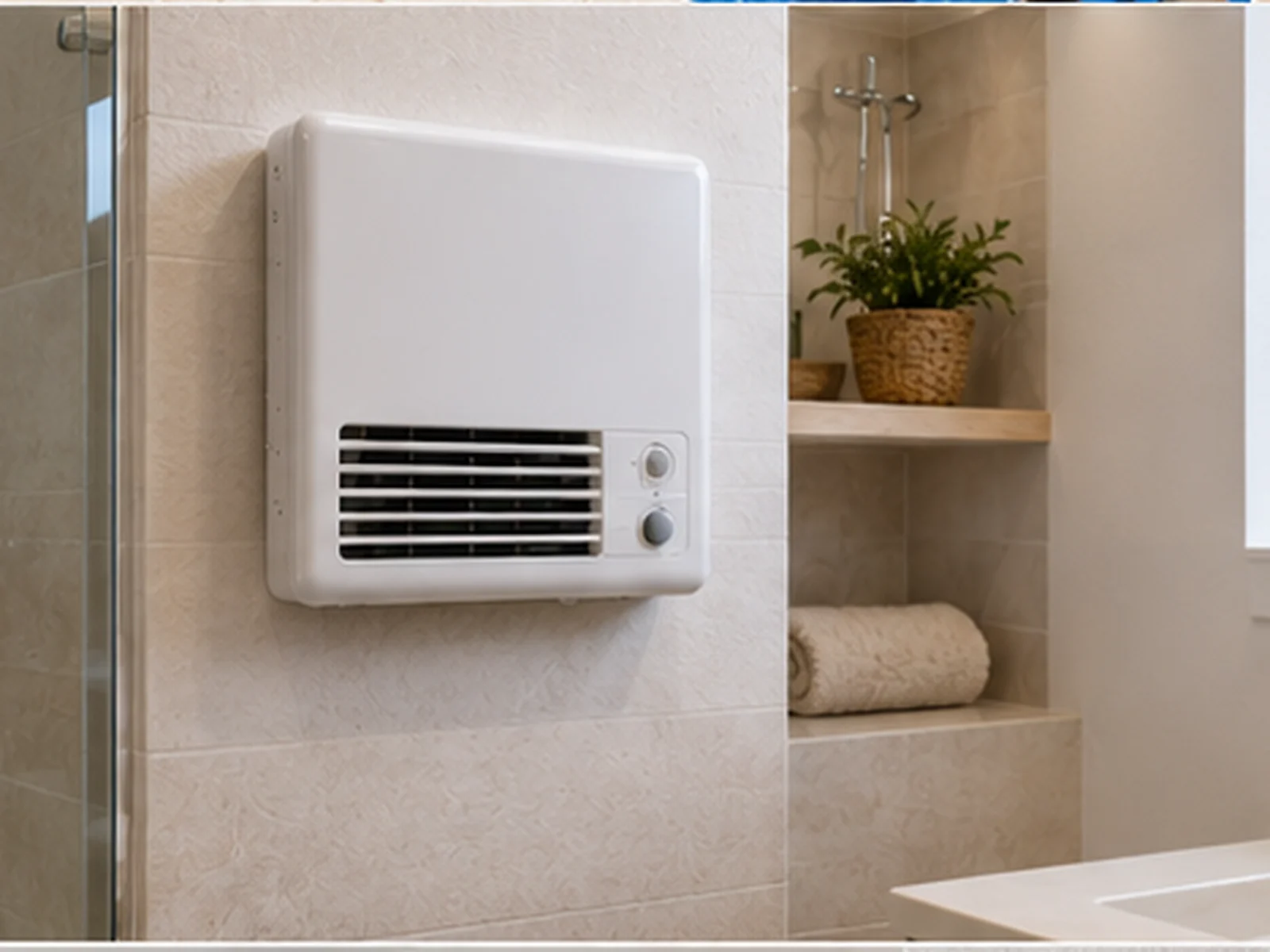
Wall-mounted electric bathroom heaters fitted across the Costa del Sol. Low-profile, IP-rated, certified by a registered electrician with three-year parts and labour warranty.
Spanish homes are built to keep the heat out, not to hold it in. Walls are lighter, ceilings are taller and bathrooms are usually tiled floor to ceiling. The result is a room that takes a long time to warm up in winter, even when the rest of the house is comfortable. A wall-mounted electric bathroom heater fixes the problem without major work: warm the room in five to ten minutes, switch off when finished, and use no energy through the rest of the day. We fit bathroom heaters in apartments, townhouses and villas across the Costa del Sol from Nerja to Gibraltar.
Where a bathroom heater makes sense
A heater suits any tiled room that takes too long to warm under the existing heating. Bathrooms are the obvious case. Kitchens come a close second, especially in apartments where the kitchen sits on a north-facing facade. Utility rooms and downstairs cloakrooms are the third common case. The heater is wall-mounted on a high bracket out of the splash zone, fed from a switched fused spur or a dedicated circuit, and runs on a timer or thermostat. The output is short and sharp: a 1.5 to 2 kW unit lifts a small bathroom from 14 to 22 degrees in under ten minutes.
Bathrooms with tiled walls and floors that hold the chill
North-facing kitchens that stay cold through January
Guest bathrooms in rentals where guests want fast warmth
En-suites where a towel rail alone is not enough
Sizing on bathroom volume, not floor area
Bathrooms with high ceilings need more output than a floor-area calculation suggests. A typical Costa del Sol bathroom of eight to ten square metres with 2.5 metre ceilings takes a 1.5 kW heater. The same floor area under 3 metre ceilings takes 2 kW. Larger family bathrooms with a separate shower cubicle and a freestanding bath need 2.5 kW or two heaters working off a thermostat. Sizing too small leaves the room never warm enough. Sizing too large heats the air and then idles.
Spanish bathroom-zone electrical rules
Spanish wiring norms divide a bathroom into protection zones around the bath and shower. A heater inside zones 1 or 2 must be IP44 rated as a minimum and run from a circuit with an RCD on the consumer unit. The unit must mount above 2.25 metres from the floor in zone 2 to keep clear of the splash arc. A registered electrician issues the boletin certifying the install, which is the paperwork the property owner needs for insurance and resale.
Timer, thermostat or PIR control
Three control styles cover most installs. A built-in timer suits owner-occupied homes where the morning and evening pattern is predictable. A wall thermostat outside the splash zone gives more accurate room control. A PIR (motion-sensor) trigger suits rental bathrooms where guests forget to switch off, because the heater only runs while someone is in the room. We pick the control style based on whether the property is owner-occupied, long-let or short-let. Smart Wi-Fi heaters for app control are an option where the owner is rarely on site.
Survey, quote and installation
From first call to working system
Step 1
Site survey
An engineer visits the property to measure the bathroom volume, check the existing electrical circuit, confirm the bathroom zones and identify the right wattage for the room. Survey appointments are free across the Costa del Sol.
Step 2
Quote and brand pick
We send a written quote with the recommended heater, the control style, all materials, the boletin fee where a new circuit is needed and the labour figure.
Step 3
Installation
Most heater installs fit in half a day. A new circuit run from the consumer unit adds a few hours. The unit mounts on the wall above 2.25 metres in zone 2, with the supply hard-wired or fed from a switched fused spur.
Step 4
Commissioning and warranty
We commission the heater, set the timer or thermostat, run the RCD trip test and walk through the controls. Three-year parts and labour warranty starts that day.
Why EnviroCare
Why local experience matters
Trading since 1996
Close to thirty years on the Costa del Sol fitting bathroom heating, water heaters and electrical work for British and European homeowners across the coast.
Registered electrician for the boletin
Bathroom electrical work needs a boletin from a registered electrician under Spanish wiring norms. Our team handles the certification as part of the install.
Multilingual team
English, Spanish and Dutch across the office and field staff. Quotes, invoices and warranty paperwork issued in your preferred language.
Three-year parts and labour
Every new install carries a three-year EnviroCare warranty on parts and labour, on top of the manufacturer warranty on the heater itself.
A 2 kW heater running for ten minutes morning and evening costs roughly 4 to 6 euro a month at 2026 PVPC tariffs. A timer or PIR keeps the figure low. Leaving the heater on through the day pushes the bill into the high tens of euros and is rarely needed in a Costa del Sol winter.
Is a bathroom heater safer than a portable plug-in?
Yes. A wall-mounted heater installed by a registered electrician is fixed above the splash zone, hard-wired into a certified circuit and protected by an RCD. Plug-in portable heaters in a bathroom carry real risk: trailing leads, water contact and overload on a circuit not designed for resistive loads. We never recommend a portable in a Spanish bathroom.
Do bathroom heaters need annual servicing?
Less than central heating equipment, but the circuit and the RCD trip should be tested annually as part of the wider electrical safety check. Owners on a maintenance contract get this included alongside the air conditioning service. The heater itself is sealed and low-maintenance.
Can a bathroom heater replace a towel rail?
It depends on what the household needs. A towel rail dries towels and keeps the room comfortable through a longer warm-up. A bathroom heater pushes warm air fast for short bursts. Many bathrooms benefit from both: the towel rail running on a low timer through the day, the heater on a PIR for fast warmth when the room is in use.
Will the heater work in a tiled, north-facing kitchen?
Yes. The same wall-mounted heaters fit kitchens and utility rooms with the same circuit and certification rules. Bathroom-zone limits do not apply outside bathrooms, which usually allows for a slightly larger heater on a more accessible wall position. Kitchens with patio glazing often need 2.5 kW or two units.
How do I get a heater fitted?
Send a WhatsApp to +34 670 409 759 with a photo of the bathroom or kitchen and we will book a free survey. The engineer measures the room, checks the existing circuit and quotes within a few days. Most installs run as a half-day job.
Need help with bathroom heating?
Tell us what you need, where the property is and whether the work is urgent.